Editor's Note: This post is part of our "Cartoon Coffee Break" series. While we take talent management seriously, we also know it's important to have a good laugh.
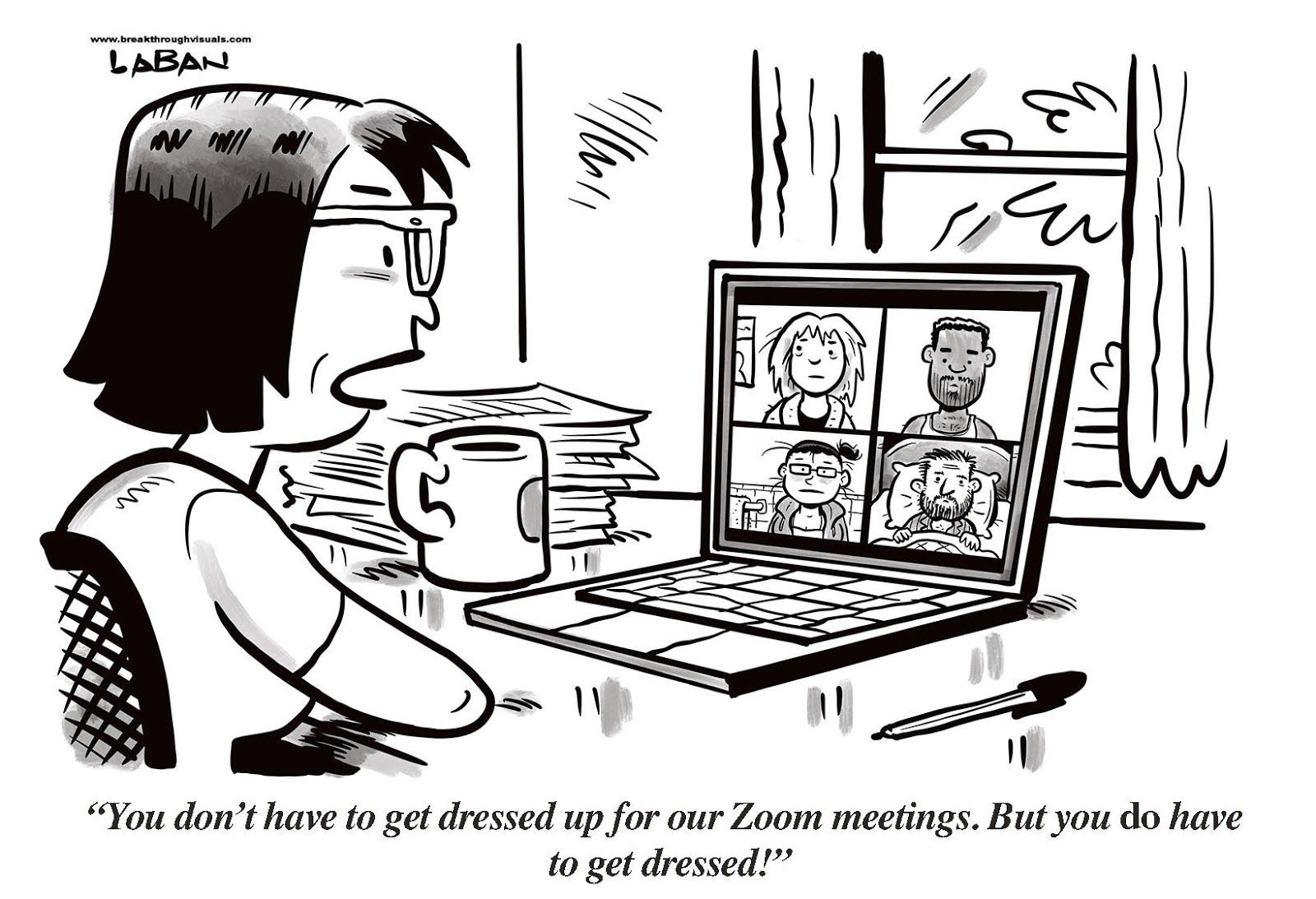
Cartoon by Terry LaBan
With shelter-in-place and social distancing measures still in effect for most of the United States, companies and teams are still working remotely. While some are thoroughly enjoying this at-home work experience, others are exhausted by it. More specifically, some are experiencing "Zoom fatigue," a new term that describes the draining effect of video conference calls.
Why do they wear us out so easily? It’s due, in part, to how video calls force us to behave: For example, employees have to engage in long stretches of direct eye contact and see each other’s faces up close. Remote work is causing us to interact with casual acquaintances, coworkers and even strangers in ways that are typically reserved for close relationships. What’s more, video conferences require workers to focus more intently on conversations (which can be exhausting) and can even make it more difficult to communicate, since picking up on social cues or body language is challenging—if not impossible.
As remote work continues, workplaces will have to keep looking for signs of Zoom fatigue and actively trying to prevent it. To do this, companies should encourage employees to take breaks after every video call, avoid multitasking, and wherever possible, replace them with phone calls or email updates.