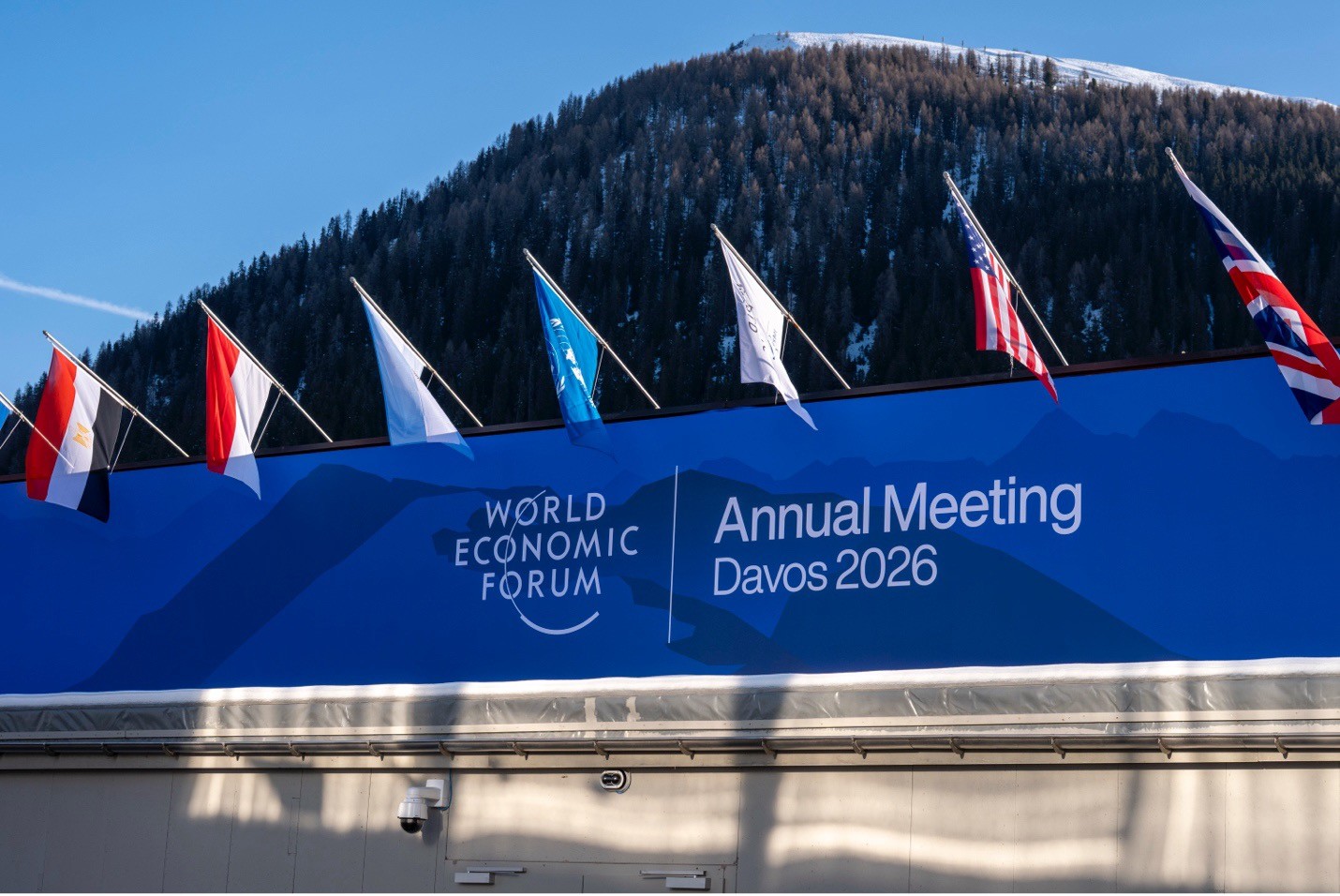
I came to Davos this year with a clear agenda: to focus on what moves the needle on jobs, skills, and workforce readiness. The World Economic Forum Annual Meeting in Davos is always a unique convergence of global leaders, but 2026 felt different. The urgency was sharper, the patience for vague commitments was thinner, and the consequences of inaction were no longer theoretical.
The pace of technological change has been compounding, demographic shifts, and geopolitical fragmentation has accelerated workforce gaps that have outstripped the capacity of institutions to keep up; both public and private need to adapt.
Workforce development took center stage
Across many of the sessions, side meetings, and closed-door conversations, one concern kept resurfacing: we are running out of time to fix the skills mismatch. AI deployments are accelerating and resulting in a pause on hiring, particularly for entry level workers, where task composition reveals 30% of their work is ripe for automation. Green transitions are reshaping entire industries and talent needs. Millions of workers remain locked out of opportunity where there are hiring demands, not due to a lack of individuals, but as a result of skills gaps. According to our own Skills Economy report, 74% of employers globally struggle to find qualified talent.
The Forum’s Reskilling Revolution session which I had the pleasure to chair framed this conversation, with its ambition to reach one billion people with better education, skills and jobs to support economic growth, innovation and resilience in a rapidly changing global economy. What stood out was not the scale of the ambition and supporting targets of its members, but the growing consensus across industries that reskilling was bigger than a workforce innovation and competitiveness strategy, but is now an economic necessity across these stakeholders and within sessions led by education experts
Three takeaways that will move the needle in 2026
1. Reskilling strategies shift towards better alignment for public-private
There was a noticeable shift in tone. Skills discussions moved out of HR rooms and minister-level sessions. The language changed too, from “future-proofing” to “survival.” Companies are realizing that hiring their way out of talent shortages is no longer viable. Governments are acknowledging that education systems alone cannot keep pace.
What’s encouraging is the rise of public-private partnerships designed to move faster than traditional institutions. What’s missing, still, is consistency in measurement. Participation is excellent, but aligned measurable outcomes that show ROI on policy changes and curriculum to labor continuity are necessary.
2. The jobs debate is maturing
AI dominated Davos, but the conversation around jobs was more nuanced than in past years. The binary framing - jobs lost versus jobs created - is giving way to a more honest assessment: most jobs will change, and many workers will be left behind unless we intervene deliberately. Reskilling is not a moral hedge for automation and AI’s displacement. Reskilling is a mechanism that allows automation and AI to continue scaling responsibly.
3. Country-level workforce agendas
One of the most constructive developments this year was the focus on country-level workforce strategies. Several governments spoke candidly about fragmented systems and the need for lifelong learning frameworks that extend beyond formal education.
Those approaching the right framework shared these characteristics; clear national skills priorities that aligned to economic strategy, co-investment models with employers and data infrastructure to track outcomes over time to reinvest in programs that work.
What this means for Cornerstone
For Cornerstone, Davos reinforced our mission and commitment to strengthening workforce readiness, improving economic mobility, and helping more people translate verified skills into real opportunity. That means doubling down on our own innovation so we can continue providing the skills gaps and reskilling pathways tied to the jobs that are changing and not yet known. It means we continue partnering more deeply with governments and educators to inform these evolving changes.
Dialogue matters, but delivery is what history remembers. Davos 2026 made it clear that the reskilling conversation has matured - now we need to ensure that execution follows.


